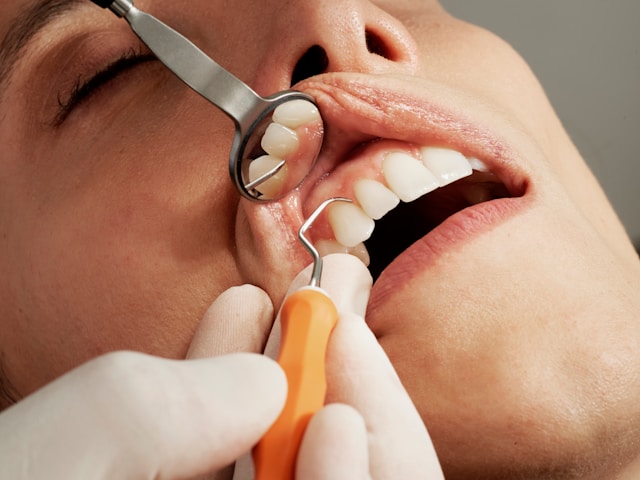
You might be feeling a little frustrated right now. You did the “right” thing, invested in dental work, maybe a crown, a filling, or veneers, and now you are worried that something is wrong. A tiny chip. A bit of sensitivity. A dark line near the gum. You might even be wondering if all that time and money at the dentist was worth it. A visit to a trusted family dentist in North San Antonio can help you understand what’s going on and what to do next.end
That worry is understandable. Dental restorations are not cheap, and you probably hoped they would quietly last for years without you having to think about them. When they start to feel fragile or look different, it can stir up a mix of stress, guilt, and even a bit of regret.
Here is the quiet truth that often gets skipped. Getting the crown or filling was not the finish line. It was the starting point of a new phase. This is where preventive dentistry comes in. When you understand how everyday habits and regular care protect your restorations, you can keep your teeth stronger for longer and avoid repeat treatment on the same tooth.
So, the short version. Preventive care is what allows your existing dental work to last. It lowers your risk of new cavities around old fillings, protects your gums, and often saves you thousands of dollars and many hours in the chair over a lifetime.
Why do “fixed” teeth still cause problems later?
Here is the part that no one likes to hear. A restoration does not turn a tooth into something indestructible. It simply repairs or replaces damaged tooth structure. The tooth around and under that restoration is still very much alive, and it can still decay, crack, or develop gum problems.
Think about a common example. You get a white filling for a cavity. For a while, everything feels fine. Then years pass. Plaque builds along the edges where tooth meets filling. Maybe flossing gets skipped some nights. A tiny gap forms at the margin. Bacteria slip in. The original cavity is “gone,” yet a new one is growing right next to the filling. The tooth starts to hurt only when the decay is deep.
This is why untreated tooth decay is still one of the most common chronic conditions, according to public health data on cavities and tooth decay. Restorations do not cancel your risk. They simply change where and how new problems show up.
Now layer on the emotional side. Every new problem on an already treated tooth feels heavier. You might think, “I just fixed this. Why is it happening again?” That sense of being stuck in a cycle is exactly what preventive dentistry is designed to break.
How does preventive care actually protect fillings, crowns, and veneers?
You might wonder how something as simple as cleanings, checkups, and home care can protect complex dental work. The answer is that restorations fail in very predictable ways, and preventive care targets those weak spots.
Here are a few of the most common threats to restorations and what preventive care does about them.
1. Decay creeping in at the edges
Most fillings and crowns eventually fail at the margin, meaning the border where the material meets your natural tooth. Plaque tends to cling to those edges. If it is not removed, acids from the bacteria soften the tooth right next to the restoration and a new cavity forms.
Regular cleanings and careful flossing remove that plaque before it causes damage. Fluoride can also harden the outer layer of the tooth that surrounds and supports the restoration. This is one of the most direct ways preventive dentistry for restorations pays off.
2. Cracks and chips from biting and grinding
Even modern dental materials, which continue to be studied and improved as you can see in research on dental materials and their performance, can only handle so much force. If you grind your teeth at night, chew ice, or use your teeth to open packages, the risk of cracks and chips goes up sharply.
Preventive visits are where these habits are noticed. Your dentist might see flat, worn surfaces or tiny fractures before you feel anything. That is when a night guard, bite adjustment, or simple behavior changes can protect both your natural teeth and the work you have already paid for.
3. Gum problems that loosen restorations
Crowns, bridges, and veneers rely on healthy gums and bone for support. If plaque and tartar sit near the gumline, the tissue can become inflamed. Over time, bone can be lost. The result is often a dark gap at the edge of a crown, sensitivity, or even a loose restoration.
Preventive cleanings remove hardened buildup that you cannot reach at home. Routine exams catch early gum disease while it is still reversible. When your gums are healthy, your restorations sit more securely and look better for longer.
So, where does that leave you? It means that protecting dental work with preventive care is less about doing something fancy and more about doing the basics consistently and with intention.
What happens if you “wait and see” versus staying proactive?
It can be helpful to compare two different paths. One is the “I will call the dentist when something hurts” approach. The other is a steady preventive routine tied to your general, cosmetic, and restorative dentistry care.
| Approach | Short-term Experience | Long-term Impact on Restorations | Typical Costs Over Time |
|---|---|---|---|
| “Wait until it hurts” care | Fewer visits at first, but more emergencies and urgent appointments later | Higher risk of decay under fillings, failed crowns, and repeated work on the same teeth | Fewer small bills, more large unexpected expenses for root canals, new crowns, or extractions |
| Consistent preventive care | Regular, planned visits that are usually quick and predictable | Restorations tend to last closer to their full expected lifespan, fewer surprises | Modest, routine costs, often much lower overall than repeated major treatments |
When you look at it this way, you can see why dentists talk so much about prevention. It is not just about avoiding cavities. It is about protecting the work you have already done so you are not constantly starting over on the same teeth.
Three steps you can take now to protect the dental work you already have
You do not need to overhaul your entire life to protect your restorations. Focus on a few high-impact steps that you can actually stick with.
1. Create a “non-negotiable” home routine around the edges of your restorations
Pay special attention to the borders of your fillings, crowns, and veneers. That is where problems usually begin.
Brush twice a day with a soft toothbrush and fluoride toothpaste, making sure to gently angle the bristles toward the gumline and around any dental work. Floss once a day, but instead of rushing, slide the floss up and down the side of each tooth and around each restoration. If you have tight spaces or bridges, ask about small interdental brushes or floss threaders. These simple tools are often the difference between a crown that lasts five years and one that lasts fifteen.
2. Treat your checkups as maintenance for your investment
Think of your fillings, crowns, implants, and veneers as you would a car or a roof. They need routine maintenance, not just emergency fixes. Schedule regular exams and cleanings, usually every six months, or more often if your dentist recommends it because of your history.
Use those visits to ask direct questions. How are my older fillings holding up. Are there any early signs of wear or leakage around my crowns. Are my gums supporting my restorations well. When you treat preventive visits as strategy sessions instead of quick chores, you and your dentist can work together to avoid bigger problems.
3. Protect your teeth from grinding and high-risk habits
If you clench or grind at night, or if your partner hears you grinding, bring it up. Grinding can quietly damage both natural teeth and restorations. A custom night guard can spread out the pressure and protect the surfaces you have already paid to repair.
During the day, notice your habits. Chewing ice, biting fingernails, cracking nutshells with your teeth, or opening packages with your mouth all put unnecessary force on your dental work. Replacing those habits with safer ones is a simple way to protect every type of restoration, from a small filling to a full crown.
Moving forward with more control and less fear
If you are worried that your fillings, crowns, or veneers might not last, you are not alone. Many people feel that same knot in their stomach when they feel a twinge in a tooth that has already been treated. The good news is that you are not powerless here.
When you commit to strong preventive habits, regular checkups, and honest conversations as part of your general, cosmetic, and restorative dentistry care, you shift from reacting to problems to quietly preventing them. You give your restorations the best chance to last, and you give yourself fewer reasons to dread the dental chair.
You have already invested in your smile. Now is the time to protect that investment with simple, steady preventive care that supports both your teeth and your peace of mind.