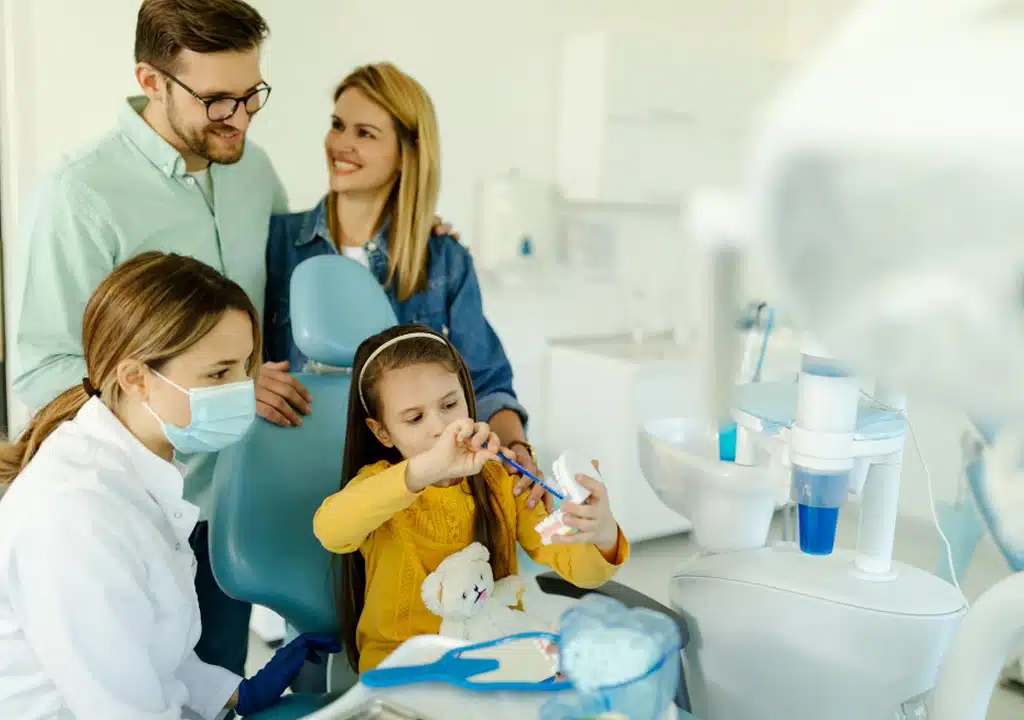
You might be feeling a bit guilty every time you think about your teeth or your child’s teeth. You buy the toothbrushes, you remind everyone to brush, yet there is still that nagging worry before every dental visit. Will there be another cavity? Did you miss something? Are you doing enough at home, or should you consider options like clear aligners in Dearborn Heights.
If that sounds familiar, you are not alone. Life is busy, kids resist brushing, adults rush through their routines, and somehow dental care slides down the list. Then one small problem turns into a bigger one, and what could have been handled with simple at-home care ends up needing professional treatment. It feels frustrating because you are trying and still not getting the results you want.
The good news is that you do not need a complicated routine to protect your smile. You need a few clear habits that family dentists know work in real homes with real schedules. This guide walks through 4 tips family dentists share for better at-home care, why they matter, and how to fit them into an already crowded day. You will see where problems usually start, how to calm those worries, and how to feel more confident about your daily care.
Why does at-home dental care feel so hard to get right
You already know the basics. Brush twice a day. Floss once a day. Limit sugar. Yet putting those simple rules into practice can feel anything but simple.
Maybe your child melts down every night when it is time to brush. Maybe you fall into bed exhausted and skip flossing more nights than you want to admit. Maybe money is tight, and every cavity fills you with worry about the bill as much as the tooth. Because of all this, you might start to wonder if good home care is realistic for your family at all.
Here is the deeper problem. Small shortcuts do not hurt right away. You can skip flossing tonight and tomorrow your teeth still feel fine. A child can rush through brushing and still get a smile sticker from school. There is no instant alarm. The damage builds quietly. By the time pain shows up, the tooth has already been breaking down for a while.
That gap between what you do and when you feel the results is where people get stuck. It is easy to think “I am probably doing okay” until a dentist points out early gum disease or multiple cavities. That can feel embarrassing or discouraging, even though you have been doing your best with the information and time you had.
So, where does that leave you? It means you need clear, doable habits that do not rely on willpower alone. Habits that protect you in those busy, tired, real-life moments. This is where family dentists focus their advice, because they know that is where most people struggle.
Tip 1: How a simple brushing routine protects your whole mouth
Most people are brushing, but not brushing well enough. The National Institute of Dental and Craniofacial Research explains that good oral hygiene means cleaning the teeth and gums in a way that actually removes sticky plaque every day. You can read their guidance on effective brushing in this oral hygiene overview.
Family dentists usually see the same pattern. Patients brush too fast, stay on the chewing surfaces, and ignore the gumline. That leaves plaque sitting where it causes the most harm, right where the teeth and gums meet.
Try this instead.
Use the “2–2–2” rule. Brush for 2 minutes, 2 times a day, and help children under 8 twice a day. Use a soft-bristle brush. Angle the bristles toward the gumline. Use small, gentle circles. Spend 30 seconds on each section of your mouth. Upper right, upper left, lower right, lower left.
If you have kids, turn it into a routine, not a battle. Use a song that lasts about 2 minutes or a simple timer. Stand with them and brush your own teeth at the same time. Children copy what they see more than what they are told.
Tip 2: Is flossing really that important at home
You may already know the answer, yet still struggle to make flossing happen. Flossing reaches the tight spaces between teeth where a toothbrush cannot clean. That is where food and bacteria hide and where many cavities and gum problems start.
For adults, the barrier is usually time and habit. For kids, it is coordination and cooperation. Caregivers often feel stuck between “this is important” and “this feels impossible.”
The NIDCR offers specific guidance for helping children with flossing and other care. You can find practical tips in this resource for caregivers about flossing and home care support.
Here is a gentler way to approach it.
Start with once a day at the same time. Many people find bedtime easiest. Use floss picks if traditional floss is hard to manage. For young children, you can sit behind them on a couch or bed, cradle their head gently, and floss for them. Keep your tone calm. Praise effort, not perfection.
With time, flossing becomes just “what we do” rather than a fight. That small daily habit can do as much to protect your mouth as any treatment a general dentist can provide in the office.
Tip 3: What you eat and drink between brushes matters more than you think
Many families are surprised to learn that it is not just how much sugar you eat. It is how often your teeth are exposed to it. Sipping juice or soda throughout the day, or snacking on crackers every hour, means your teeth spend more time under acid attack.
Every time you eat or drink something with sugar or simple starch, bacteria in your mouth produce acid. That acid softens the outer layer of your teeth. Your saliva works to repair that damage, but it needs breaks between snacks and drinks to do its job.
So what can you change without turning meals into a constant negotiation? Try to keep sweet treats and drinks with sugar to mealtimes. Offer water between meals. Choose snacks like cheese, nuts, plain yogurt, or crunchy vegetables when you can. You do not have to remove every treat. You just want more “tooth-friendly” moments than damaging ones.
Tip 4: How to build a daily routine your family can actually follow
Knowing what to do is one thing. Making it part of your day is another. The American Dental Association offers simple guidance on creating a daily dental care routine for both adults and children. You can see examples and ideas in their advice on building a daily oral care routine.
Family dentists often suggest treating home care like any other important habit. It needs a place in your schedule, tools that are easy to reach, and a plan for when things go wrong.
Consider these ideas.
Keep toothbrushes and paste in a basket on the counter so they are visible. Set a reminder on your phone for bedtime brushing, especially for kids. Store floss where you actually stand at night, not in a drawer you never open. If you miss a night, do not give up. Just start the next day again. Consistency over weeks and months matters more than any single missed day.
How does home care compare to what happens at the dental office
You might wonder how much difference home care really makes if you still see your dentist every 6 months. The truth is that both matter, but they play different roles. Think of regular visits as “reset and repair” and your daily routine as “protect and prevent.”
The table below compares what happens at home versus what happens during professional care.
| Aspect | At Home Dental Care | Professional Dental Care |
|---|---|---|
| Main goal | Prevent plaque buildup and protect teeth and gums every day | Deep cleaning, diagnose problems, and treat issues that have already started |
| What you do | Brushing, flossing, fluoride toothpaste, healthy food choices | Cleanings, exams, X-rays, fillings, sealants, advice on personal risks |
| How often | 2 to 3 times per day, every single day | Usually every 6 months, more often if gum disease or high risk |
| Impact on cost | Lower cost now, helps avoid many expensive treatments later | Higher cost per visit, but needed to catch and fix problems early |
| What happens if you skip | Higher risk of cavities, gum disease, bad breath, and pain over time | Problems may go unnoticed until they are painful or harder to treat |
Seeing this side by side often helps people understand why dentists talk so much about home care. Office visits cannot replace what happens in your bathroom every morning and night. They only work well when they build on strong habits at home.
Three simple steps you can start today
1. Create a 5 minute family routine, twice a day
Pick two anchor times that already happen every day. For most families, that is after breakfast and before bed. Commit to 5 minutes of focused mouth care at those times. Everyone who is old enough brushes for 2 minutes. Younger children get help. One person sets a timer. If you can keep this going for 2 weeks, it will start to feel automatic.
2. Make flossing non negotiable, but easy
Choose a type of floss that feels realistic. That might be traditional string, floss picks, or small interdental brushes if your dentist has recommended them. Put them where you cannot miss them. On top of your toothpaste, next to your phone charger, or beside the bathroom mirror. Tell yourself flossing is “part of brushing,” not a separate task. Even if you only floss the front teeth at first, start. You can add more areas as the habit grows.
3. Pick one small food or drink change
Instead of trying to change everything you eat, choose one meaningful shift. For example, switch from sipping juice all afternoon to offering water between meals. Or move dessert to mealtimes instead of snacks. Or replace one sugary drink each day with water or milk. A single steady change can support better at home dental care more than a big change that fades in a week.
Moving forward with more confidence about your smile
You do not have to be perfect to protect your teeth and your family’s teeth. You only need a few steady habits and a bit of patience with yourself. Brushing well, flossing once a day, making small food changes, and sticking to a simple routine can dramatically change what your dentist sees at your next visit.
If you ever feel unsure, remember that your general dentist is there to support you, not judge you. Bring your questions. Ask about your brushing technique. Talk about your child’s struggles. The more honest you are, the more practical help you will receive.
You have more control over your oral health than you might feel right now. Start with one change today. Add another next week. Over time, these small steps can turn worry into confidence every time you open your mouth to smile.